
General Enquiries: 020 7561 1786 or Email: info@credit-union.coop      |       CU Loan Repayment Issues Only: 020 3763 8397  or Email: loansupport@credit-union.coop

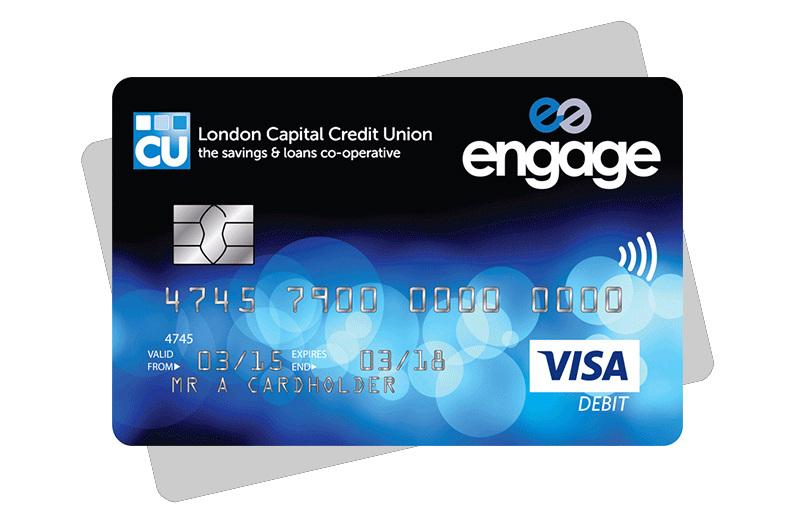
Cut out the cash with our Engage VISA card

With Christmas coming, our Engage VISA card could be the ideal way to manage your spending. This is a pre-paid VISA card which allows you to avoid paying with cash while not exceeding your spending limit.

Recent news reports have highlighted that many shops are now reluctant to take cash, due to social distancing and hygiene concerns, with some even refusing outright. Our Engage VISA card is the perfect alternative, which you can use to shop in-store or online, pay bills, receive your wages and manage your Credit Union loan.

The great thing is that, unlike a credit card, our Engage VISA card doesn’t let you go over your spending limit, and has a fixed and open charging structure.

The Engage VISA card is free for purchases made in the UK, offers a free mobile app for Android and iPhone and provides a very useful ‘Engage envelope’ money management tool to help you pay bills or set money aside. For example, you could put your Credit Union Christmas loan on the card and keep the Christmas money separate from your current account.

It is free to set up a standing order and you can get free email alerts to help you track your spending. In addition to low management fees, you can earn up to 15% cashback every time you use your card with Engage rewards partners. Participating retailers include B&Q, Asda, Halfords, M&S, Sainsburys, Argos and Debenhams, and many more.

The Engage mobile app allows you to check your balance, view transactions, send money to other bank accounts, view the latest cashback rewards, update your information and request a call back from the customer services team.

Credit Union Secretary Don Kehoe said: “We have seen, since the start of the coronavirus pandemic, that many stores are now reluctant to take cash, even for essentials. With Christmas coming, this could be a major inconvenience for many people.

“A credit card is not the answer for everyone, as it is too easy to build up expensive debt, but our Engage VISA card is a great alternative. As a pre-paid card, it doesn’t let you spend more than your limit, and there are no hidden charges.”

Click here to find out more about our Engage VISA card.

Previous

Next

How We Decide to Whether to Offer a Loan – The Basics

The Credit Union’s primary objective is to help members avoid or escape from debt by promoting a culture of saving. When we offer loans, we only do so if the borrower agrees to save a little while they repay. The establishment of a savings habit is proven to reduce the harms and risks of long-term borrowing becoming problem debt. Basically, when we get a loan application our decision is based on the following two principles:

1. Do we trust the applicant to repay the loan?

2. Can the applicant afford the loan repayment

This guide is designed to help members understand our thinking so you can best prepare if you should need to apply or re-apply for a loan.

1. Key Points in Our Assessing Trust of the Applicant

a) Has the applicant started saving? The money we lend is members savings so, especially at busy times, we have to give priority to loan applications from members who have made at least one savings payment. That first payment is good evidence that you are a real person and helps us confirm identity.

b) Proper Proof of ID & Address? What forms of proof of identity and address has the member provided? If you are able to connect your bank account through ‘open banking as art of the loan application process it a good way of proving ID. First time loans may be required to use online Open Banking.

c) Previous Borrowing History. Has the applicant borrowed and repaid us previously? Previous good repayment record supports any application.

d) Did the applicant inform us of other money owed? Failure to list all debts in the application process is likely to result in the loan application not being approved. It suggests that the applicant is either not in control of their money or not being completely honest with us and in either case we cannot put our members savings at risk by lending. Credit Reference Agency checks are used to show us what money is owed and to whom.

e) Is the member sensible with money? When we review the bank transactions of the loan applicant, we often see patterns of expenditure that suggest the applicant is not taking a sensible approach to expenditure. Changes in the way they manage their finances would suggest that the loan would not really be necessary. We want to help people be in control their finances and do not want to lend members savings to people who are not deemed sensible with the way they spend. This may be things like gambling, excessive shopping and/or eating out/takeaway food deliveries.

f) Always be ‘up front’ in your application. Honesty pays. We do not judge.

2. Key Points in Our Assessing Affordability for the Applicant

a) Is this loan in the member’s best interest? The value of the loan application in comparison with your income is a key measure of affordability. The loan interest members pay on loans pays our staff salaries, but we are not out to profit from you, rather we want members to borrow less over time and take control of their finances.

b) Positive Bank Balance at Month End? Is there money left in the members bank account at the end of the month that would be sufficient to cover the loan repayment if approved? If not, the member must explain how the loan would become affordable, for instance, by reducing expenditure in other areas.

c) Is the applicant struggling with existing debts? When we review the bank transactions of the applicant we can see income and expenditure. If the loan applicant tells us how the loan will clear other debts and reduce their expenditure this will help us understand affordability.

d) Is the purpose of the loan considered sensible? If the applicant is not paying essential bills such as mortgage or rent then a loan for a car or holiday is likely to be unwise and unaffordable.

e) Has the applicant fully explained why they need to borrow? Always feel free to email or call us explaining the circumstances that mean you need to borrow. The reasons for needing to borrow are complex, but being honest and explaining the circumstances can often help the ordinary humans on the Loans Team at the Credit Union to be able to assess trust and affordability. You briefly explaining your thinking about affordability gives us confidence that you are thinking sensibly about money, and sometimes allows us to suggest alternatives that may well be in your best interest.

f) Is the loan to clear other more expensive debts? Credit Reference Agency checks are used to show us what money is owed and to whom. If your loan application is to pay off other debts, stop and list every one of those debtors.Work out the cost of each. Consider clearing one or two at a time if its your first Credit Union loan. Pick them off one or two at a time, the most expensive first.

g) Has the applicant stopped to think about affordability? The ‘Your Money’ section of our website provides access to a budget planner which, if used and shared, gives us good evidence of affordability. Particularly helpful for loan applicants in financial stress. We hope this gives you an idea of how we decide yes or no to loan applications. The decision is by one or more other credit union members on our Loans Panel. We hope this helps you understand our thinking so you can best prepare if you should need to apply or re-apply for a loan.