

Shopping Smart this Black Friday
Our Black Friday Checklist
- Decide what you need in advance: Write a short list of things you already planned to buy, and stick to it.
- Check the price history: Use PriceSpy or a similar tracker to see what an item has really cost over the past year.
- Compare retailers: The advertised “deal” is often matched or beaten elsewhere.
- Set a budget and keep to it: Use the “three times over” test as your final check.
Black Friday and Cyber Monday are just around the corner, and “great deals” on everyone’s favourite goods are on the horizon. But how much do you actually save by waiting until 27 November to do your shopping?
For many in the UK, Black Friday brings to mind hopeful shoppers (some even camping out) queuing in the dark outside shops, waiting for the doors to open so they can grab the latest flat-screen TV, iPhone or vacuum cleaner at a discount.
They weren’t mad to do it. Deals were once good enough to justify a night in a tent in the cold. Asda’s first Black Friday event in 2013 featured discounts of up to 70% on selected electronics, and the supermarket sold a month’s worth of TVs in just 45 minutes.
Thirteen years on, the event is nowhere near as exciting for people hoping to save.
Deals have largely been scaled back, and some experts even estimate that shoppers lose money by buying on the day. Consumer group Which? compared the cost of 175 home, tech and health appliances across eight retailers between May 2024 and May 2025. It found that on Black Friday 2024, only a small minority of the items were at their lowest price of the year.
Even so, the tradition keeps growing. VoucherCodes projects that British shoppers will spend a record £9.8 billion over Black Friday weekend in 2026. Why? Retailers have a few tricks up their sleeve to keep us spending…
Tricks to Watch Out For
Inflated Prices
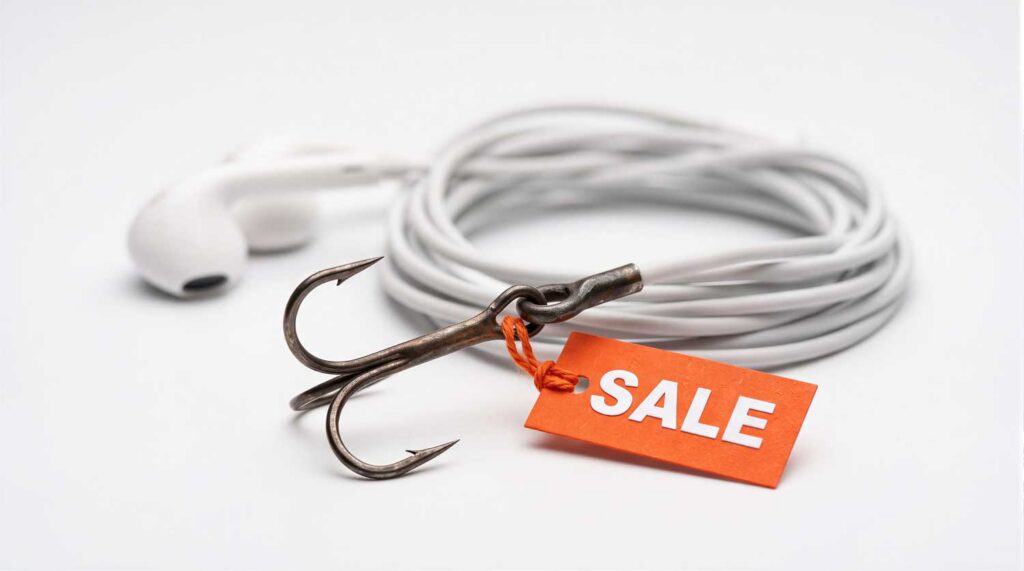
Shops use a variety of schemes to make Black Friday discounts look more generous than they are. A popular one is the inflated “was” price. Shops hike prices in the months before November, then slash them on the day and market the item as a bargain.
Which? tracked a Samsung vacuum cleaner between May 2024 and May 2025. It was listed at £350 on Black Friday 2024, supposedly an amazing discount. But it had cost £299 for most of May and June 2024, before rising to £399 in September and £500 in October. Anyone who bought on Black Friday paid more than the usual price.
To check a deal is really as good as it gets, use PriceSpy.com, a price comparison site that lets you track an item’s cost throughout the year.
Creating FOMO (Fear of missing out)
Few marketing tactics work better than urgency, and retailers love to play on our Fear of Missing Out (FOMO) during the spending season. The relentless marketing makes it seem as though you’d be a fool to miss this “once in a lifetime opportunity”, and it can be hard not to spend. Before you do, take stock and make sure you’re living within your budget. At London Capital Credit Union, we advise asking yourself one question before any purchase: “Can I afford this item three times over?” If the answer is no, it may be best to think twice.
Start Saving, Not Spending
Black Friday is all about spending, but it’s also a great prompt to rethink how we save. Rather than feeling pressured to snap up a deal before it disappears, why not put a little aside each month for the things you really want or need?
Saving with London Capital Credit Union can help you build a pot for bigger purchases, so you’re in a stronger position when next Black Friday comes around. You can then make the most of genuine bargains without stretching your budget or relying on borrowing. You can start from just £1 a week or £5 a month, by direct debit, standing order, or from your salary if you work for one of our payroll partners